Showing posts with label Malaysian. Show all posts

Sunday, November 21, 2010

Hakka Pestle Tea Rice/Ham Cha Farn/Looi Cha Farn

This dish is from the Chinese migratory Hakka dialect group and is several hundred years old. The Hakkas, especially this sub-group called Ho Poh , have a unique tradition regarding this dish as medicinal, a detox meal which is also reputed to boost metabolism and servet his supersalad, with 7 types of vegetables, on the seventh day of Chinese New Year just like the cantonese tradition of serving Yee Sang which most chinese are accustomed to.


Ham Cha Farn(salty tea), Looi Cha Farn(ground tea) or Thunder Rice, has a lot of variations. The tea used ,be it green or black signifies and determine the flavour and taste of the dish. It is sometimes kept simple by grinding the tea, add salt to taste and hot boiling water, to make a broth. However others may add roasted peanuts, sesame seeds or both together with the tea leaves and herbs like mint, basil, perilla and saw coriander, in the grinding process to make into an almost medicinal tea broth. This alters the flavour of the dish significantly. The taste however, is not for everyone. Some find it enervating and refreshing, others do not like the bitter or strong herbal notes.


The essential ingredients are Farn(Cooked Rice), which can be puffed rice (mee chang) or rice grains fried with garlic and a little oil, prior to cooking and three of the seven ingredients which will determine a good Ham Cha Farn/Looi Cha Farn are dried shrimps, choy poh(preserved radish) and firm tofu. These three are to be sauted and seasoned with sugar and white pepper..


To complement the tea and rice, a wide variety of carefully selected vegetables (including blanched long beans, cabbage, carrots, four-angled beans, chye sim, celery, are used. It should be noted that meat and fish is seldom added to this diah as the the main idea is to eat lots of vegetables, making this dish cheap, hearty , nutritious and a fibre-rich.


Continue for recipe HERE

Wednesday, November 17, 2010

Pan-fried Fish Fillet with Pace Picante Sauce


As part of the Foodbuzz Tastemaker Program, I received 2 bottles of Pace Picante sauce. They arrived just in time, making my cooking dinner easier as i was under the weather and did not feel like cooking an elaborate dinner, not that i cook elaborate everyday but at least it must be substantial.


I would usually serve pan-fried fish , fillets or whole fish with some maggi or soya sauce as this way it is more friendly for the younger ones in the household, but since i have Pace Picante Sauce, i decided to serve the adult's portion of the fish with some Pace Picate Sauce, smeared on top, straight from the bottle. It was a hit and thank you Foodbuzz Tastemaker Program.

Continue HERE for recipe

Friday, November 12, 2010

Pandan Flavored Ban Jian Kuih


According to Wikipedia - a QUEST is a journey towards a goal and my QUEST is to make the perfect ban jian kuih and the GOAL is that it should be chewy and honey-combed.


Many attempts and i am still 'in search of"???.

For recipe continue to read HERE


Monday, October 18, 2010

Step-by-step Mui Choy Kau Yoke


A task which usually take 5 minutes was not so and it was so frustrating.  Anyway, how difficult or time-consuming it was, i made a promise to post the step-by step on How to make Mui Choy Kau Yoke and .........


the promise is kept


The step-by-step can be found HERE


Monday, September 13, 2010

Kuih Lapis Rainbow

It is strange but it is true with our tastebud, there are so many kinds of food that i do not like when i was younger but love them now.  Kuih Lapis which is chewy is one of them,  I like this Traditonal Nyonya Kuih Lapis  which is rich and soft.  But!!!  now that i have tried making this recipe after too many requests for this chewy type, and surprising i liked it.  I think i know why i did not like this chewy type cos i have eaten too many badly made ones.  I found that this kuih will be good if a considerable amount of thick coconut milk was used in the recipe.  I shall not call this 'Nine Layers Koh' cos i have made it with 10 layers.  I wanted to have 3 colors, so i ended with 9 layers - 3 layers of every color and a topping layer thus making it 10 layers.


Ingredients:

A:
80 gm rice flour
80 gm all-purpose flour
180 gm tapioca starch
2 x 400ml cans coconut milk(SAVOY brand)
100 ml water
240 gm fine granulated sugar
1/8 tsp potassium carbonate & sodium bi-carbonate solution aka 'kan sui'
1/4 tsp salt

B:
Food colorings
Pandan paste
Vanillin

Method:

Mix all the ingredients A in a large bowl and then pass through a fine sieve onto to a large microwave-safe bowl.

Microwave the batter, one minute at a time, stirring after every minute.  I did 3 times(my microwave is only 900 watts).  The sugar should have dissolved and the batter thickens slightly.

Measure 3 portions weighing 435 gms. Leaving the rest of the batter as the topping or last layer.

Leave one portion white and divide into 3 bowls - each weighing 145 gms.

Color the next portion pink and divide into 3 bowls - each weighing 145 gms.

Color the last portion with pandan paste and divide into 3 bowls - each weighing 145 gms.

Color the topping layer with a darker red color.

Heat a 9 inch greased pan in the steamer for 5 - 10 minutes, then pour in one of the white color batter.

Steam for 5 minutes and if the layer is cooked through, pour in one of the pink color batter and steam for 5 minutes..

When pink layer is cooked through, pour in the green layer and steam.

Repeat with these layerings until all 9 layers are done.

Finally pour in the topping layer and steam until cooked through and further steam the whole kuih for another 10 minutes.

Remove from steamer and allow kuih to cool to room temperature before cutting.  Use a very sharp knife for cutting.  Although i like the plastic crinkle cutter, it does not do a very good job on this chewy cake.

Serves

Saturday, September 11, 2010

Chicken And Wood Ear Fungus Wine Soup

This dish is a confinement dish.  The chinese, especially the cantonese would cook this dish as a post-natal diet for the whole month of confinement after childbirth.  During pregnancy, a woman may feel bloated and feel like there is a lot of gas in the tummy. This is due to the softening of our body ligaments and etc to make way for the baby’s growth. To expel those gas from the stomach, one soothing food we can take is ginger but after childbirth, gas is bloating in abundance, ginger and more ginger in every dish will help, as food prepared with ginger develop a tendency to move outward.  The chinese do not encourage fresh fruits and vegetables, so ginger is the only source of fiber.  After delivery, the body is susceptible to 'cold' and must be kept warm, therefore wine is the best as it moves  upwards and pushes up the energy. Wood Ear Fungus helps to prevent various forms of bleeding and prevents blood clotting   All these practices are considered efficacious for curing the body's imbalance but especially as a preventive therapy against ailments in later years.  I, the renegade must remain cognizant and respectful of the indigenous beliefs and practices linking the events of reproduction and the health status of women.


Ingredients and Method


Recipe is the same as Chicken With Stone's Ginger Wine except peanuts are omitted, vegetable oil and glutinous rice wine were used instead of sesame oil and Stone's Ginger Wine.  This dish was cooked for my friends to enjoy the Home-brewed Glutinous Rice Wine. 
 
Serves

Thursday, September 9, 2010

Kuih Gading Galoh

My sisters have always told me that i take too much upon myself in whatever i do, and they are absolutely right.  And, do i learn???? No!  Same old me, repeating my habits and trying to do too much.  Like last saturday, i had a potluck to go to and not satisfied with just bringing one kind of kuih, decided to make another one at the eleventh hour.  See, what happened to the most delicious kuih made, it was shabbly cut cos it was not cold enough and there was not enough time to do a good job.  I hate myself for that but do you think i will make kuih in a hurry again, you guessed right, i will.


Ingredients:

Rice Layer:

1 1/2 cup glutinous rice - washed and soaked
100 ml thick coconut cream
Thin coconut milk - enough to cover the rice
1 tsp  kosher salt
2 pieces pandan leaves
1 tsp dried bunga telang - reconstitute with 1 tbsp hot water and a drop of vinegar

Topping:

3 large eggs
300 ml thick coconut milk
1/4 tsp salt
2 tbsp tapioca starch
1/2 cup unbleached all-purpose flour
3/4 cup sugar

Method:

Put soaked glutinous rice into the rice cooker and enough thin coconut milk to just covering the rice.  Add salt and pandan leaves.

Press the cook function and as soon as the rice is cooked,  discard the pandan leaves and pour in the thick coconut cream.  Close the lid and leave on warm for 10 minutes for the coconut cream to marry into the rice.

In the meantime, mix the ingredients in a microwave-safe bowl and microwave on high for 1 minute and stir.  Continue to cook for another 1 more minute.  The mixture should still be runny.

Remove rice from the rice  cooker and put it in a greased 9 inch cake pan and pressed the rice down.  Sprinkle the coloring from the bunga telang on to the top of rice.  If you like a marbled look, then you would have to stir in the color to the rice and then press down.

Put the rice to steam for 5 minutes, then pour in half of the topping.  Steam the topping until cooked, then using a fork, roughen the surface with a fork before pouring in the rest of the topping.  Steam on medium heat until cooked and done.  Do not use high heat - patience will rewarded with a smooth topping.

When done, leave kuih to cool before cutting.


Serves

Saturday, August 21, 2010

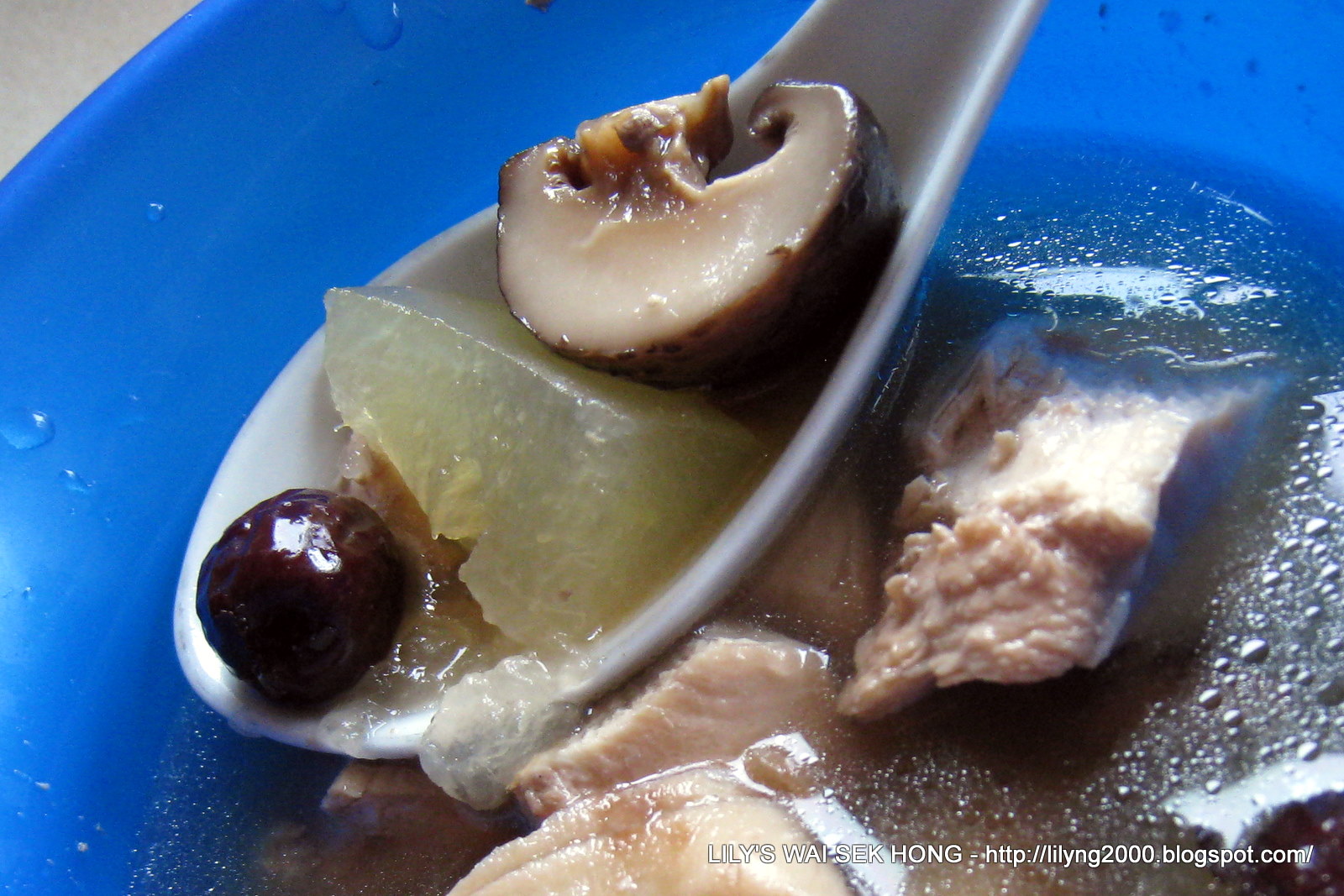
Winter Melon Soup/Toong Kua Tong

This summer has been hot, so this is a common summer soup to relieve heatiness and cool down the body. My maternal grandma - Ah Poh is Cantonese, so drinking soup is important to my cantonese part in me.  My Ah Poh does not know how to even boil a pot of water, she had a 'Mui chai' who came along with her when she got married.  I later found out that  was why i had 2 'Tai Yee Mah' cos Ah Poh had considered her as her daughter.  Although Ah Poh did not know how to cook, she was an expert in criticising all foods served.  She had been branded with the saying - 'Hue Than mng hue cheong".  I remembered that she reminded my mother that a little piece of 'Tai Tau Choy' had to be added to Winter Melon Soup to enhance the flavor of the soup.  There are a variety of additions you can add to make this soup flavourful and unique and 'Tai Tau Choy' is a must for me.


Ingredients:

1 slice Winter melon (based on the diameter of 8″ and thickness 2″)
1 lb Pork ribs
8-10 pcs Red dates - pitted
5 or 6 dried shitake mushrroms - soak
1 piece  tai tau choy - soak and wash away the salt
3-5 pcs Dried oysters/dried scallops/dried octupus/dried squid - soak
Salt to taste

Method:

Put pork ribs in the pressure cooker and put in enough water to cover the ribs.  Bring it to the boil and conitinue to boil until all the scums rise to the surface.  Remove all the ribs and wash away all the scums.  Discard the water in the pressure cooker and wash preassure cooker really well.

Cut winter melon into small cubes of 1″ (remove seeds and skin)

Put cleaned ribs back to the pressure cooker together with the rest of the ingredients except the salt.  Put in the water that mushrooms and dried octupus were soaked.  Top up with more water until it is enough to cover the ingredients.  Close the lid of the pressure cooker and pressurized for 30 - 45 minutes, counting from the time the pressure cooker starts hissing.

Turn off heat when cooking time is over and let the pressure released by itself before opening the lid.

Taste the soup before adding salt as tai tau choy can be very salty.

Enjoy


Serves

Monday, July 26, 2010

Sarawak Serikaya Cake

This cake is so rich and moist, no wonder the recipe is so closely guarded.  I was able to make this cake for my dear friends, nellie and juliana's birthday, due to the generousity of Florence, who gave me the 'Gula Hitam'.  Thank you, Florence, my friends really loved this cake.  You should see the expression in their faces at the first bite, with eyes close, savouring the richness of this cake and on opening their eyes, expressed - umm, this is delicious, can i have another piece.?  HAPPY BIRTHDAY, Nellie and Juliana.


Ingredients:

Method:

Follow The Secretive Cake and replace the Queen's Browning Sauce with the Original Gula Hitam from Sarawak.

Using a stencil, sprinkle 'snow powder' on top of cake.


Serves

Tuesday, July 20, 2010

Pennywort/Pegaga Drink - The Secret Fountain of Youth

"A hundred, oh Mothers, are your natures and a thousand are your growths. May you of a hundred powers make whole what has been hurt. Where the herbs are gathered together like a thing is an assembly there the doctor is called a sage, who destroys evil, and averts diseases.” - Hymn to the Plants, Rig Veda X, 97

Mother Nature has so perfectly planned her pharmacy so that it is is within everyone’s access.  It is there to nourish and supply us with abundant energy, as well as nurture us when we have some illness, we need only to become aware of its use for us

Pegaga is a polymorphous, creeping plant, rooting at nodes, with sometimes significant tap root, cylindrical and glabrous stems. Other names of pegaga including Centella asiatica (L.), Hydrocotyle asiatica, gotu kola, Indian pennywort (English), Mandukaparni (India), pegaga (Malaysia), and Ping Da Wan (崩大碗), Di Qien Cao (地錢草), Zhi Xue Cao(积雪草), 雷公根, 蚶殼草, 地堂草, 銅錢草, or 落得打, rau ma (vietnamese)

Read about it's medical benefits from factOdiz bite-sized knowledge


Ingredients


2 handfuls pennywort, with stems pinched off
200ml boiling water
180g sugar or honey to taste


Method:
If using sugar, make a simple syrup by dissolving the sugar in the boiling water the allow to cool completely.

Add all the ingredients to a blender along with 5 or 6 ice cubes and water(as concentrated as you'd like), blend at high speed.

Then using a fine-mesh colander, strain out the leafy sludge. Taste and add syrup/honey or water if necessary.

Serve poured over ice.

Store the remainder in the fridge.

Enjoy!

Thursday, July 8, 2010

Red Curry/Sambal Banana Cake

Although these summer months bring us juicy sweet fruits and enjoyable arrays of berries, the banana is still hanging gloriously. on my kitchen counter. The bananas are always the loser at the race to the finish line of comsumption, therefore, giving me a chance to give these losers their dignity back by making into something delicious.  Looking at the title of the cake, you must have thought that i have 'gone banana', an expression that the effects of bananas on the brain. To top matter worse, adding in red curry/sambal to the banana cake.!!!! - crazy yes but a very delicious cake is borned.


Ingredients:

2 large eggs
1/3 cup buttermilk/yogurt/sour cream
1/2 cup vegetable oil
1 cup mashed banana(about 2 - 3 riped bananas)
1/2 cup sugar
2 tbsp red curry paste/sambal paste(Follow this Garam Assam Paste)
1 1/2 cup all-purpose flour
1/4 cup cornstarch
1/2 tsp baking powder
1/2 tsp baking soda
1/2 tsp salt


Method:

Preheat oven to 350 degrees F.

Line the base of 2 loaf pans ( 3 inch by 7 inch) and grease well.

In a large bowl sift together the flour, cornstarch, baking soda, baking powder, and salt and set aside.

In another large bowl, whisk together the eggs, buttermilk/yogurt/sour cream,. oil, mashed banana , red curry/sambal and sugar.

Add the dry ingredients. Stir mixture for a count of 10. Do not overmix.

Pour into prepared loaf pans and bake in preheated oven for 35 - 40 minutes. Check for doneness.

Remove from oven and let cool in pan for 10 minutes before turning out into rack to cool.


Friday, June 25, 2010

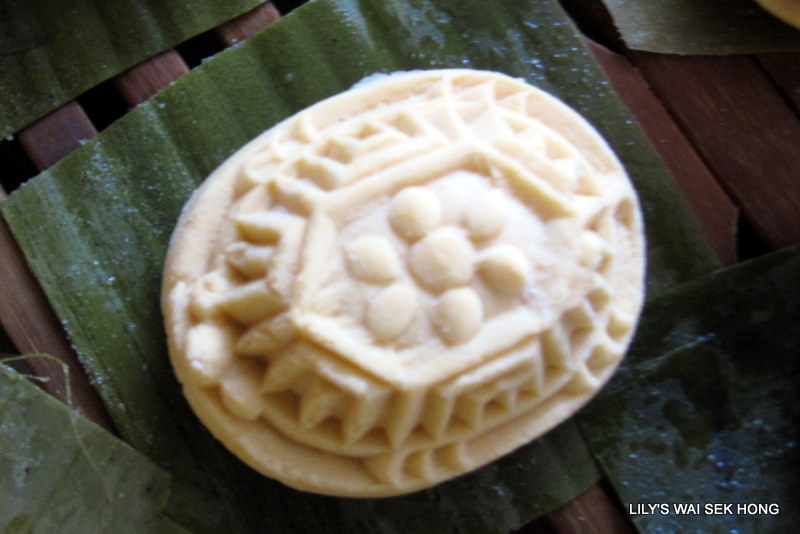
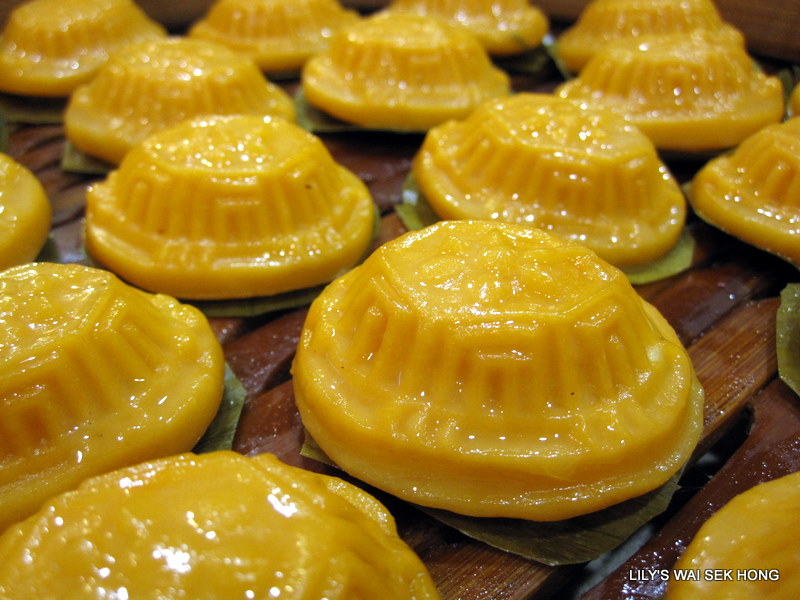
Sweet Potato Ku


These are before steaming


These are after steaming

I cannot be any happier that these 'ku' turned out exceptional beautiful.  The color was so  natural and sweet, of course it was - no food coloring added - the culprit was orange sweet potato/yam.  The filling is the usual mung bean - oh oh i have a story to relate about this filling, yes this particular bag of mung bean filling.  It was a leftover from one of our cooking sessions(a group of us ladies gather every sunday and we cook and bake). So, one sunday, I was the first to arrive at Nellie's and Nellie went through her freezer and pulled out this bag, she asked if i wanted to eat durian.  Of course i said yes, and we had to defrost it fast before the other ladies turn up, there won't be enough to go around. the durian looked so good, yellowish and looked seedless too.  So, into the microwave it went for defrosting.  After a minute of two, the bag came out of the microwave, Nellie and I laughed until tears came down and me with my incontinense, had to rush to the rest room - It was not durian but a bag of mung bean filling.  The moral of the story was, we were bad hearted, we did not want to share and we got none too. I have learned my lesson and am sharing the mung bean filling with those who turned up for dinner last weekend. Hope they liked these cute bite-size 'ku'.


Ingredients:

For the dough:

150 gm orange sweet potato/yam - mash immediately after steaming and keep it hot.
150 gm glutinious flour
50 ml thick coconut milk
50 ml hot boiling water
1/4 tsp salt
2 tbsp cooking oil

Filling:

Follow the recipe from Angkoo Ah Mah Chew


Method:

Mix the glutinous rice flour, salt and coconut milk to the hot mashed sweet potato.  Knead until dough does not stick to your hands - slightly on the wet side, it will dry out after resting.  If the dough is soft and pliable, do not add in the water.   Lastly add in oil and knead lightly till dough is shiny. Rest dough for at least 1 hr.

Scale the filling and dough according to the size of the mould.  Flatten it and wrap in a filling.  Seal and shape into a round/  Dust the mould with a little glutinious rice flour.  Press firmly into the mould  Knock and dislodge from mould.  Place on oiled banana leaf.  Continue process with the rest of the dough pieces.

Use tap water and wash off excess glutinious rice flour from the surface.  Do it quickly and lightly before steaming the 'ku' over LOW heat for 5 - 10 minutes. Remove the steamer lid after 5 minutes to lower the heat as the pattern will not be as sharp if the heat is too high.  Remove from steamer and brush with oil for a  shiny surface.


 Serves